If you live in Hawaiʻi and fly between islands even a few times a year, you’ve probably looked at both Hawaiian Airlines and Southwest Airlines and wondered which one actually gives you the better deal.
On paper, both airlines now offer Hawaii resident discount programs. Hawaiian has Huakaʻi (read my Huaka’i guide here), and Southwest has its interisland perks through Rapid Rewards (I break those down in detail in my Southwest interisland benefits guide).
At first glance, they look pretty similar — quarterly discount codes, free checked bags, and a few extra perks if you have their credit cards.
But once I started digging into the actual terms and testing real bookings, it became clear these programs work very differently. And in some cases, the details aren’t even consistent depending on where you read them.
There are also a few things most comparisons completely ignore — like agricultural restrictions that affect what you can bring on board, and the fact that one airline simply has far more interisland flights each day than the other.
So instead of just listing benefits, I wanted to answer a more practical question: which one is actually better for you?
In this guide, I’ll break down the real differences, call out a few confusing details you’ll want to double-check yourself, and walk through a real booking example so you can see how the savings actually play out.
Hawaii Resident Discount Programs Comparison
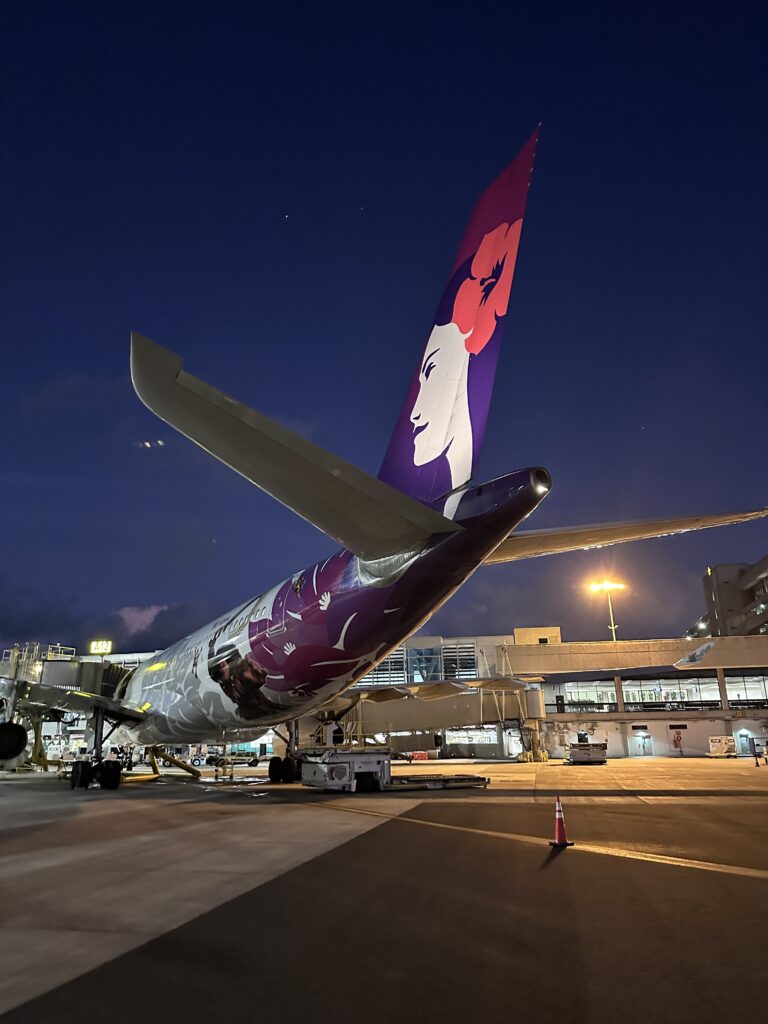
Here’s a side-by-side look at what you actually get with Hawaiian Airlines vs Southwest Airlines when flying interisland.
| Benefit | Hawaiian Airlines (Huakaʻi) | Southwest Airlines (Resident Perks) |
|---|---|---|
| Eligibility | Hawaiʻi residents (Atmos Rewards) | Hawaiʻi residents (Rapid Rewards) |
| Discount Codes | 4 per year (quarterly) | 4 per year (quarterly) |
| Base Discount | 10% off fares | 10% off cash fares |
| Credit Card Boost | 20% off with eligible cards | 20% off with eligible cards |
| Points Earning | Min. 500 points per segment | Min. 1,000 points per flight |
| Redemption Model | Dynamic pricing (demand-based) | Dynamic pricing (demand-based) |
| Award Flights | Based on fare pricing | Based on fare pricing |
| Checked Bags | 1 free checked bag | 2 free checked bags |
| Code Usage | Conflicting terms (see below) | 1 passenger per code |
| Flexibility | Not clearly defined | No change or cancellation fees |
| Exclusive Deals | Monthly fare sales | Not a core feature |
| Booking Platform | HawaiianAirlines.com / AlaskaAir.com | Southwest.com |
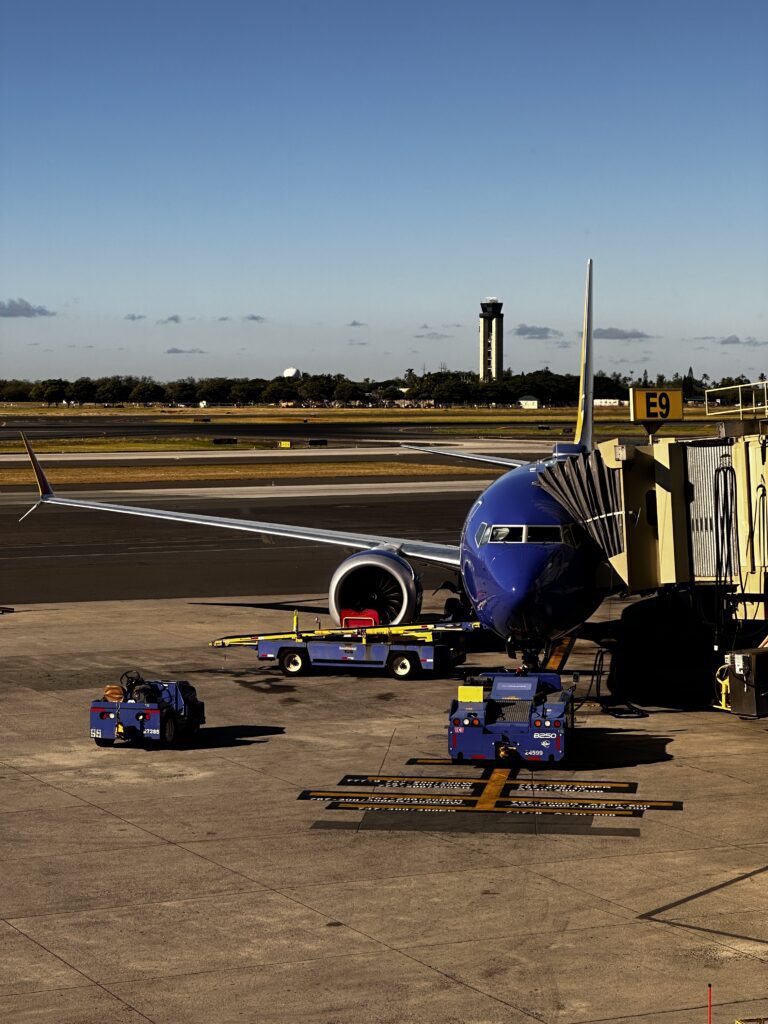
Key Differences Between Hawaiian and Southwest Interisland Flights
If you’re trying to decide between Hawaiian Airlines and Southwest Airlines for interisland travel, the biggest differences come down to a few practical factors that can impact both cost and convenience.
Checked Bags
This is one of the easiest differences to understand.
- Hawaiian includes 1 free checked bag per passenger
- Southwest includes 2 free checked bags per passenger
For most interisland trips, one bag is enough. But if you’re traveling with more gear, surfboards, or multiple bags per person, Southwest can save you money quickly.
Points Earning and Value
Both airlines let you earn rewards, but they work a bit differently.
- Hawaiian earns about 500 miles per segment (1,000 round-trip)
- Southwest earns about 1,000 points per flight (2,000 round-trip)
Hawaiian miles are generally worth more per point, but Southwest gives you more points per trip. In practice, the total value ends up fairly close, with Southwest usually having a slight edge over time.
Flight Flexibility and Schedule
This is where Hawaiian has a clear advantage.
- Hawaiian runs more interisland flights throughout the day
- Southwest has fewer daily departures on most routes
That means Hawaiian gives you more flexibility if you need to change plans, catch an earlier flight, or avoid long layovers between islands.
Agriculture and Carry-On Restrictions
This is a detail a lot of travelers don’t realize until they’re at the airport.
- Southwest typically turns their aircraft onto a transpacific flight so may have tighter restrictions
- Hawaiian usually allows these items in carry-ons on interisland flights (unless the aircraft continues to the mainland)
If you’re bringing back items from places like local farmers markets, this can make Hawaiian the more convenient option.
Checked Bags
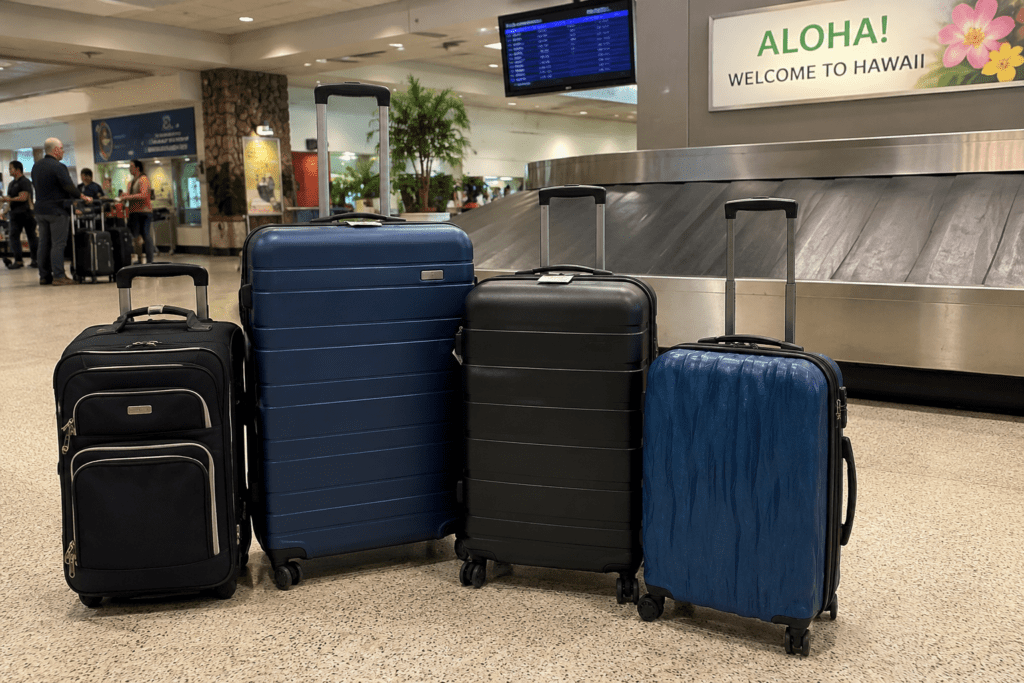
One of the simplest differences between Hawaiian Airlines and Southwest Airlines comes down to checked bags.
Most interisland travelers are only bringing one bag — if that — so in a lot of cases, the difference doesn’t really matter day to day. Hawaiian includes one free checked bag, which covers what most people need.
But if you’re traveling with more than one bag, that’s where Southwest quickly pulls ahead. They include two free checked bags per passenger, which can make a noticeable difference for families, longer trips, or anyone bringing bulkier items like gear or surf equipment.
It’s a small detail, but depending on how you travel, it can easily tip the balance.
Real Booking Example: Honolulu to Maui (Family of 4)
To see how this actually plays out, I ran a realistic booking scenario using both Hawaiian Airlines and Southwest Airlines — and then calculated the real value once you factor in both discounts and points.
Scenario:
- Route: Honolulu (HNL) → Maui (OGG)
- Travelers: 2 adults + 2 kids
- Trip: Round-trip
- Timing: Typical weekday
- Assumption: Discount codes available
Step 1: Base Fare
Typical interisland fares:
- ~$70–$120 one-way
- ~$140–$240 round-trip per person
Family of 4:
- Total cost: ~$560–$960
At this level, pricing is usually similar — the difference comes from perks and value after the trip.
Step 2: Discount Value
Hawaiian Airlines (Huakaʻi)
- 10% discount (all passengers):
- Calculation: $560–$960 × 10% = $56–$96 savings
- 20% with credit card:
- Calculation: $560–$960 × 20% = $112–$192 savings
If the code only applies to one passenger:
- Calculation: ~$140–$240 × 10–20% = ~$14–$48 savings
Southwest Airlines
- 10% discount (4 codes used):
- Calculation: $560–$960 × 10% = $56–$96 savings
- 20% with credit card:
- Calculation: $560–$960 × 20% = $112–$192 savings
More steps to apply, but the outcome is consistent.
Step 3: What the Points Are Actually Worth
Using WalletHub average valuations:
- Hawaiian miles ≈ 1.71¢ per mile
- Southwest points ≈ 1.21¢ per point
Step 4: Points Earned Per Trip
Southwest Airlines
- 1,000 points per flight → 2,000 round-trip per person
- Family of 4 = 8,000 points
Value calculation:
8,000 × $0.0121 = ~$97 in future travel value
Hawaiian Airlines
- 500 miles per segment → 1,000 round-trip per person
- Family of 4 = 4,000 miles
Value calculation:
4,000 × $0.0171 = ~$68 in future travel value
Step 5: Total Effective Value (Discount + Points)
Southwest (10% discount scenario)
- Discount: $56–$96
- Points value: ~$97
Total value calculation:
($56–$96) + $97 = ~$153–$193 total value
Hawaiian Airlines (best-case scenario)
- Discount: $56–$96
- Points value: ~$68
Total value calculation:
($56–$96) + $68 = ~$124–$164 total value
Hawaiian Airlines (worst-case scenario)
- Discount: $14–$48
- Points value: ~$68
Total value calculation:
($14–$48) + $68 = ~$82–$116 total value
What This Example Shows

When you actually run the numbers, a few things stand out.
Southwest still comes out slightly ahead in total value, mostly because you’re earning more points per trip. But the gap is smaller than most people expect, especially since Hawaiian miles are worth more on a per-point basis.
Where things really shift is in real-world travel behavior.
If you want maximum flexibility in your schedule, Hawaiian Airlines has a clear advantage simply because they run more interisland flights throughout the day. That makes last-minute changes or same-day travel a lot easier in practice.
Bottom Line From This Example
- Southwest delivers slightly more total value over time
- Hawaiian offers more flexibility and convenience in real-world scenarios
- The biggest wildcard is still how Huakaʻi discount codes apply
And that last point can swing the value more than anything else.
The Confusing Part: Huakaʻi Discount Rules

While researching this, I ran into something that’s a bit confusing.
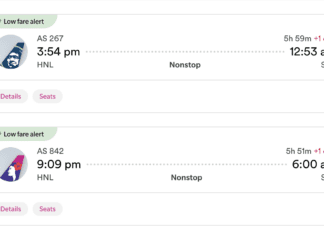
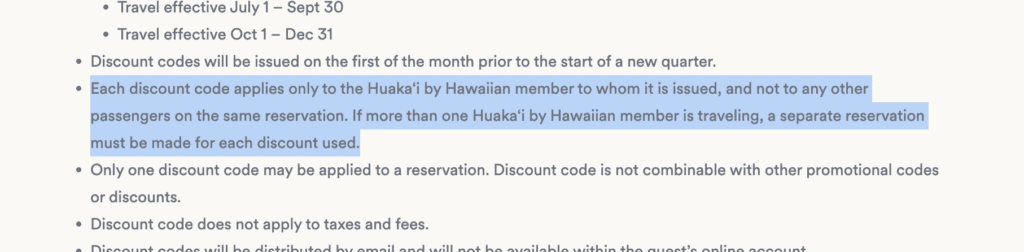
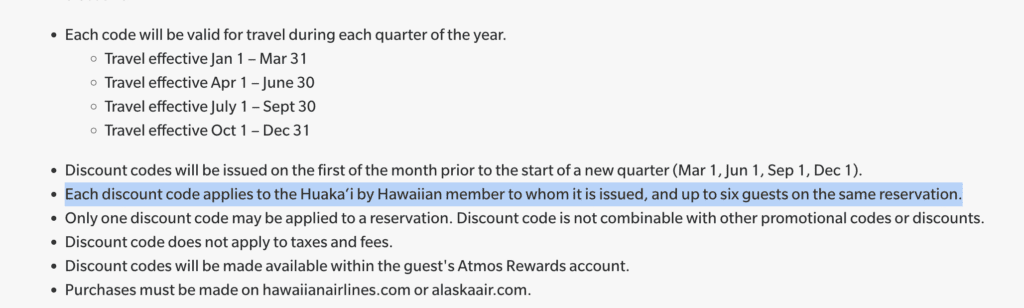
On one official page from Hawaiian Airlines, it says the Huakaʻi discount can be applied to the member plus additional guests on the same reservation. But on another page tied to the Atmos program, it clearly states the discount only applies to the individual member and requires separate bookings.
That’s a pretty big difference in how valuable the program is, especially for families or group travel.
I’ve included screenshots linked from both sources above so you can see exactly what I’m seeing. Before you book, it’s worth double-checking how the discount actually applies — because that one detail can completely change the savings.
Which One Should You Choose?
After going through all of this, the answer really comes down to how you travel.
If you’re flying interisland a few times a year and want to get the most total value back, Southwest Airlines has a slight edge. You’re earning more points per trip, you get two free checked bags, and the savings are consistent once you understand how to use the discount codes.
But that doesn’t automatically make it the better choice for everyone.
If your priority is flexibility, convenience, and a more seamless experience, Hawaiian Airlines is hard to beat. They simply have more interisland flights throughout the day, which makes it much easier to adjust plans, catch an earlier flight, or avoid long gaps between departures.
There are also smaller, real-world details that can matter more than the numbers. If you’re doing a quick trip and don’t want to check a bag, or you’re bringing back fresh fruit or local goods from somewhere like Hilo, Hawaiian is usually the easier option. Southwest’s agricultural restrictions can turn a simple carry-on into a checked bag situation pretty quickly.
And then there’s the biggest wildcard: how Huakaʻi discount codes actually apply. If those discounts work for multiple passengers on one reservation, Hawaiian becomes much more competitive — especially for families. If not, the value drops off pretty quickly.
Final Thoughts
When I first compared these programs, they looked almost identical on the surface. But once you break it down, they’re built for slightly different types of travelers.
- Southwest is more about consistent value and long-term rewards
- Hawaiian is more about flexibility and day-to-day convenience
Neither one is clearly “better” across the board — it really depends on what matters more for your trips.
If you fly often and want to build toward free travel, Southwest probably makes more sense. If you want more flight options, fewer restrictions, and a simpler experience, Hawaiian may be the better fit.
And if you’re somewhere in the middle, it might be worth trying both — especially until the Huakaʻi terms become a little clearer.
Hawaii Resident Airline Discounts FAQ
Do Hawaii residents get discounts on interisland flights?
Yes, both Hawaiian Airlines and Southwest Airlines offer resident discount programs that include quarterly promo codes and additional perks like free checked bags.
Which airline is cheaper for interisland flights in Hawaii?
Base fares are usually similar, but Southwest often provides more total value through points and baggage benefits, while Hawaiian can be more convenient depending on your schedule.
How much can you actually save with Huakaʻi or Southwest discounts?
Most travelers save about 10–20% per trip, which typically comes out to around $50–$200 for a family of four, depending on fares and whether credit card discounts apply.
Do Huakaʻi discount codes work for multiple passengers?
It depends — some official terms say the discount only applies to one passenger, while others say it can apply to multiple guests on the same reservation, so it’s worth checking at booking.
Do you earn points on Hawaii resident discounted flights?
Yes, both airlines still award points or miles. Hawaiian typically earns a minimum of 500 miles per segment, while Southwest earns about 1,000 points per flight.
Which points are more valuable: Hawaiian miles or Southwest points?
Hawaiian miles are generally worth more per point, but Southwest awards more points per trip, so the total value can end up being similar depending on how often you fly.
Is it better to use a credit card for interisland flights in Hawaii?
Yes, using an eligible airline credit card can increase your discount from 10% to 20%, which can significantly improve the overall value of either program.
Which airline is better for families traveling between islands?
It depends on how discounts apply. If Huakaʻi codes work for multiple passengers, Hawaiian can be very competitive, but Southwest offers more consistent savings with free bags and predictable discounts.
Is it worth switching airlines for Hawaii interisland travel?
It can be. If you fly often, Southwest may offer better long-term value, while Hawaiian may be the better choice for flexibility, schedule options, and ease of travel.